Thursday, 7 March 2013

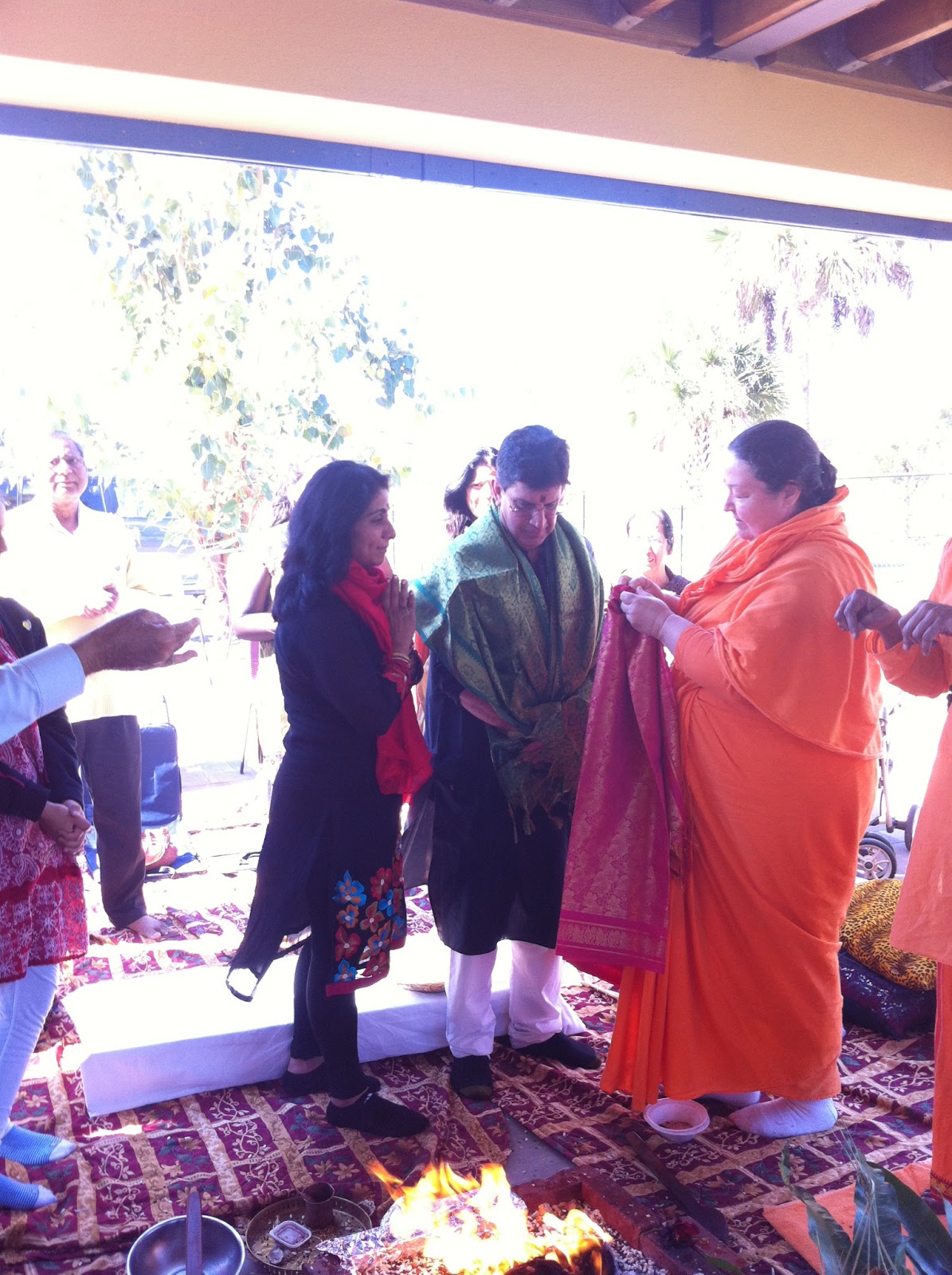
Maha Shivaratri- the Day to Attain Spiritual Boost 10th Feb 2013

Maha Shivaratri is great festival of convergence of Shiva and Shakti. This occasion falls on the Krishna Paksha of Phalgun (the Hindu month), which at the same time relates to the February – March months of the English calendar. The Mahashivratri 2013 is the day which celebrates the wedding day of Lord Shiva and Parvati.

Mahashivratri is the ‘night of Shiva’ when the Lord is worshipped with all dedication in the Hindu fraternity. Shiva, is the remover of sin and the Lord of mercy and compassion. Wholehearted dedication to the Lord will dilute the hindrances created by negative Karma and convert them into positive energy.

Om Sarva Mangal Manglaye Shivay Sarvaarth Sadhike
Sharanye Trayambake Gauri Narayaani Namostu Te

Meaning:
Oh the divine couple Shiva Parvati !
O ! Thee, the protectors of this universe,
Along with Lords Brahma and Vishnu
We pray to You for our well-being, prosperity and the enlightenment of our souls.


Wednesday, 6 March 2013

Brahman is Superior

This world is like a banyan (ashvattha) tree that is upside down, with the root on top and the branches at the bottom. The root is the radiant and constant Brahman. All the worlds find refuge in the Brahman and no one can overcome him.

One who comprehends the nature of the Brahman before his death is freed. Otherwise, his ignorance results in his being born again and again on earth.

The form of the Brahman cannot be seen with the eyes. The Brahman is beyond the power of sight. It is through powers of meditation that the presence of the Brahman can be felt in the heart. The Brahman is realized through intelligence. Those who understand that the Atman is one with the Brahman, become immortal.

Na tatra suryo bhati na candratarakam

nema vidyuto bhanti kutoyamagnihi

tameva bhantamanubhati sarvam

tasya bhasa sarvamidam vibhati

meaning:  There the sun does not shine, nor do the moon and the stars. These streaks of lightning do not shine there either, (so) what to speak of this fire? That, shining, makes all others shine. By virtue of its luminosity, all these (manifestations) are illuminated.

"Upanishads"

Brahman Makes Great


One who knows the Brahman follows the dictum that foodgrains must not be criticized. Foodgrains are the breath of life and food grains sustain the physical body. It is the breath of life which grants foodgrains and it is the breath of life which sustains the physical body. He who knows the nature of foodgrains, is blessed with foodgrains and becomes like food grains himself. Such a person has sons and animals and attains fame. The Brahman energizes him and makes him great.

"Upanishad"

Sanskrit Sloka 
 
ko 'yamatmeti vayamupasmahe
katarah satma yena va rupam pasyati
yena ca sabdam srinoti
yena va gandhanajighrati
yena va vacam vyakaroti
yena va svadu casvaduca vijanati

Meaning : Who is that Lord whom we worship? Out of the two souls residing in the body, who is that witness who is worshipped by us? The tiny jiva soul observes to see if he is the same as that Lord by seeing Whom one sees, by Whom one hears or by Whom one smells or talks about. Or by how one discriminates between the bitter and the sweet. Are we one?
 

Monday, 4 March 2013

Peace in Brahman

“The Brahman cannot be appreciated by studying the Vedas. He cannot be appreciated by listening to the recitals of sacred texts. The Brahman cannot be imagined. He reveals himself to those who are blessed. The Brahman becomes manifest to such people.”


AUM saha navavatu, saha nau bhunaktu
Saha veeryam karvaavahai
Tejasvi naa vadhita mastu
maa vid vishaa va hai
AUM shaantih, shaantih, shaantih.

Meaning of the: Let us together (-saha) be protected (-na vavatu) and let us together be nourished (-bhunaktu) by God's blessings. Let us together join our mental forces in strength (-veeryam) for the benefit of humanity (-karvaa vahai). Let our efforts at learning be luminous (-tejasvi) and filled with joy, and endowed with the force of purpose (-vadhita mastu). Let us never (-maa) be poisoned (-vishaa) with the seeds of hatred for anyone. Let there be peace and serenity (-shaantih) in all the three universes.

"Upanishad"

Sunday, 3 March 2013

Brahman is Immortality and Truth

A learned person can attain whatever world he desires. He can associate with his dead relatives after death. But all these are really illusions. Truth lies in union with the Brahman. The Brahman alone is the truth and one unites with the Brahman in a state of deep slumber. A diver keeps diving in the hope for pearls. But usually, he does not obtain any pearls. Similarly, men cannot usually realize the Brahman because they are distracted by illusions. The learned ones visualize the Brahman in the heart and so attain bliss. The Brahman is immortality and truth.
Sacrifices are nothing but a way of attaining the Brahman. Beyond heaven are two oceans known as Ara and Nya. There is a lake known as Airammadiya and by the side of the lake is a banyan tree. It is there that Brahma has a city named Aparajita. Brahma has constructed a golden pavilion there. Those who know of Brahman, go there after their deaths.
"UPANISHADS"


Friday, 1 March 2013

Brahman:- The Supreme God

The Brahman is the supreme godhead. He is omniscient, he knows everything. He is the origin. It is the Brahman who created the elements. It is into the Brahman that, at the time of destruction, the elements disappear. The Brahman is not a material object. He is not the universe. He is not a state of sleeping, nor is he a state of being awake. The Brahman is not the state of sushupti. He is not learned, nor can he be realized through learning. He is not insentient. The Brahman cannot be seen, or used, or felt or visualized. The Brahman cannot be indicated. He can be felt through the atman. He is calm and unique. The atman is the Brahman. That is how the Brahman is realized.
by: egregores, The Upanishad teaches us how to perceive Brahman in the universe and in our self-existence.


The syllable OUM is identical with the Brahman. The three components of the syllable, O, U and Ma, signify the three parts of the Brahman.


"Upanishad"  

Thursday, 28 February 2013

Brahman and Atman Present In Our Body

Both the Brahman and the atman are present in the physical body. The atman savours directly the fruit of all action. So does the Brahman, by association. Those who know about the Brahman, know this fact. So do the learned ones who light the sacrificial fire five times or the nachiketa fire three times. These learned ones know that the Brahman and the atman are always with one another, they are like light and shadow.

Part of the Brahman is in the atman. But the part of the Brahman that is in the universe is superior to the part that there is in man. Superior to this too is the supreme spirit (purusha). There is nothing above the purusha. The purusha is all refuge and all salvation.

 The purusha can be detected in living beings in the form of the atman. The learned ones can visualize the purusha through their wisdom.


Sanskrit Shloka
 
yadetaddhrdayam manascaited sanjnanam vijnanam
prajnanam medha dristirdhritirmatirmanisa
jutih smritih samkalpah craturasuh kamo vasa iti
sarvanyevaitani prajnanasya namadheyani bhavanti


meaning:- So we see that which is the heart and mind cannot also be the soul, perception, discrimination, intelligence, wisdom, insight, steadfastness, thought, thoughtfulness, impulse, memory, conception, purpose, life, desire, and control - all these are attributes of the entity within the body whose nature is Brahman, but they are not He, nor He, they.
 "Upanishad"